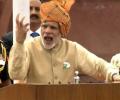
As Prime Minister Narendra Modi is set to deliver his third Independence Day speech on August 15, he is inviting ideas from citizens on issues he should speak on
Given the subdued pre-poll voter-behaviour in the state over the past couple of decades and more, and the inability of individual political parties to cobble together an alliance and announce candidates, or both, to launch grassroots-level campaigns early on, close fights with landslide victory is an equal possibility, N Sathiyamoorthy.

Consolidation of influential voting blocs might hurt the chances of AAP's Kanchan Choudhary Bhattacharya in Haridwar but she will not go down without a good fight. Mayank Mishra reports

Noting that oil prices had gone down after the BJP-led government came to power in May 2014, before they went up, Prasad said it is a problem whose solution is not in its hands.

'For a long time I didn't know what my mother did -- she kept me in the dark to protect me.' 'But whatever she did, she did it for me.' 'It's been three years since my mother passed away.' 'If she was still alive, I'd respect her choice and stand by her.'

'The political leadership is not realising that it is dividing the uniform on the lines of religion.' 'This will lead to anarchy.'

Seeking to rope in youngsters to promote cashless transactions, Modi said for every person you introduce to the BHIM app, you will get a cash back of Rs 10.
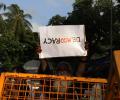
'Across the country -- in Tamil Nadu, Jharkhand, Manipur, Delhi, Bihar, West Bengal -- men were lynched on suspicion of being thieves by ordinary people armed with rods and sticks.' 'But none of these lynchings made big news.' 'None of these lynchings were cow/beef-related.' 'The perpetrators were unknown people, not so-called gau rakshaks.' 'So why were these instances of mob violence considered less newsworthy than cow-related lynchings?' asks Jyoti Punwani.

Can you even imagine the fear that must have passed through Kiran Rao's mind, asks Syed Firdaus Ashraf.
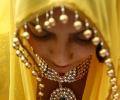
At its heart, the furore over 'love jihad' reveals an anxiety over the increase in inter-religious marriages and women's freedom, says Charu Gupta, associate professor of history at Delhi University, whose areas of research include the colonial history of Uttar Pradesh and issues of gender and sexuality.
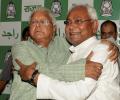
'The clearest interpretation of the November 8 mandate is that the backwards, Dalits and minorities, and a huge proportion of women cutting across caste and class, displayed massive consolidation to the extent that despite chipping of votes by the Left Front, by the Third Front and by the BSP, Mahagathbandhan candidates won, and in many cases by huge margins,' says Mohammad Sajjad.

Only national service can save the nation, and not politics: Modi
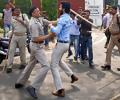
'Besides electoral opportunism, a sustained vilification of AMU on one or the other pretext helps them sustain their 'everyday communalism', the new strategy of the BJP of the Narendra Damodardas Modi-Amit Anilchandra Shah era,' says Mohammad Sajjad.

'Sexual violence against women is not something unique to India but in our parts the victim must also have to contend with other burdens. Such as the notion of 'honour' and its loss,' says Aakar Patel.

Anandiben insists her daughter was not involved in any land allocation scandal.
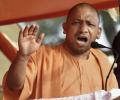
Formidable challenges including funds for the farm loan-waiver, and law and order stare him at his face, with the opposition claiming the misses have outnumbered the hits.
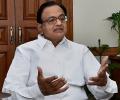
Senior Congress leader P Chidambaram on Friday rejected criticism that his party practised politics of minorityism but asserted it cannot close its eyes to the discrimination against Muslims and other sections including Dalits.

In a marathon address to the nation from the ramparts of the Red Fort, Prime Minister Narendra Modi on Saturday underlined India's unity and diversity and the progress of his 15-month-old government's policies.

'When workers in other industries enjoy protection, why should sex workers not receive similar protection?' 'Sex work should be treated as work and brought under the work schedule of the labour department.' 'We will only end up giving immunity to the pimps and brothels to buy or sell human beings. This will in turn increase trafficking of young women and children.' Rashme Sehgal reports on the debate over legalising prostitution, a bugle in whose favour has been sounded by the new chairperson of the National Commission for Women, Lalitha Kumaramangalam.
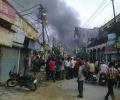
'If the BJP wants to build a minimally inclusive and secure society, in which vulnerable groups and religious minorities don't feel persecuted, then the Sangh Parivar, the party and its government must change their ways. Or else, they risk dividing India further -- violently and irreparably -- for narrow political ends,' argues Praful Bidwai.

'Who is the government to decide about my religion?' 'We are governed by the Constitution. The Constitution has given me the independence to follow my religion.'
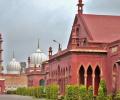
'AMU is a secular university with an Islamic ethos.' 'We do not discriminate on the basis of religion. Let me tell you Muslims do not need reservations. They need affirmative action in education.'

'The Opposition has no option but to make it an 'All versus One' fight to even think about winning.'

In a no-holds-barred interview, 20-year-old Nikita Azad discusses the backlash she has faced after #HappytoBleed, the campaign she launched to protest a derogatory statement made by the chief of the Sabarimala Devasom Board.

In a no-holds-barred interview, 20-year-old Nikita Azad discusses the backlash she has faced after #HappytoBleed, the campaign she launched to protest a derogatory statement made by the chief of the Sabarimala Devasom Board.

#Not In My Name, said ordinary citizens, as they took to the streets to reclaim the India they believed in.

For more than 23 years, Bhanwari Devi, who was gang-raped for speaking out against the marriage of two babies, has been fighting a lonely battle for justice. Rashme Sehgal traveled to Dausa in Rajasthan to meet the courageous woman, a winner of the Neerja Bhanot Award for bravery, a symbol of Indian women's struggle.
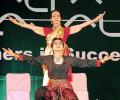
Ahmedabad's cultural scene would not have gone beyond the garba, but for Mrinalini Sarabhai's pioneering efforts.

What is Change really like in Bihar? Once seen as India's basket-case, what is its turnaround story like?

Born in poverty and subjected to inhuman abuse, Kalpana Saroj overcame all hurdles to emerge a success story.

'The media today is completely free from the government-induced fear factor.' 'It is only scared of the public backlash and its TRP ratings,' say Sudhir Bisht.

The young politician seems unfazed about the complaint and tells Subhash K Jha that she would return to the neighbouring country to foster peace.

BJP President Amit Shah -- arguably the second most powerful politician in the nation -- granted a rare television interview to the Network 18 group of news channels. Rediff.com's Rajesh Alva checks out what the BJP boss said in this word cloud assessment of the interview.

'If the RSS should be saluted for choosing such a scholarly statesman to address its highly trained cadre, one must also praise Pranab Da's sagacity for having gracefully accepting the invitation, thus disapproving any ideological apartheid,' says former BJP MP Tarun Vijay.
The DMK still wants to look elsewhere for excuses to its electoral debacle, says N Sathiya Moorthy.

Reason must triumph over blind faith, says Praful Bidwai in this tribute to murdered rationalist Narendra Dabholkar.
No BJP president is powerful when the party is in power. Amit Shah is completely dependent on Narendra Modi's clout. He has a protective political immunity and everyone knows its source, says Bharat Bhushan

We have failed to acknowledge the volatile events that have changed Mumbai.

Hers is a rags-to-riches story for the ages, peppered with risks, determination and strokes of luck.
What is Change really like in Bihar? Once seen as India's basket-case, what is its turnaround story like? Archana Masih reports from India's other most talked about state.
